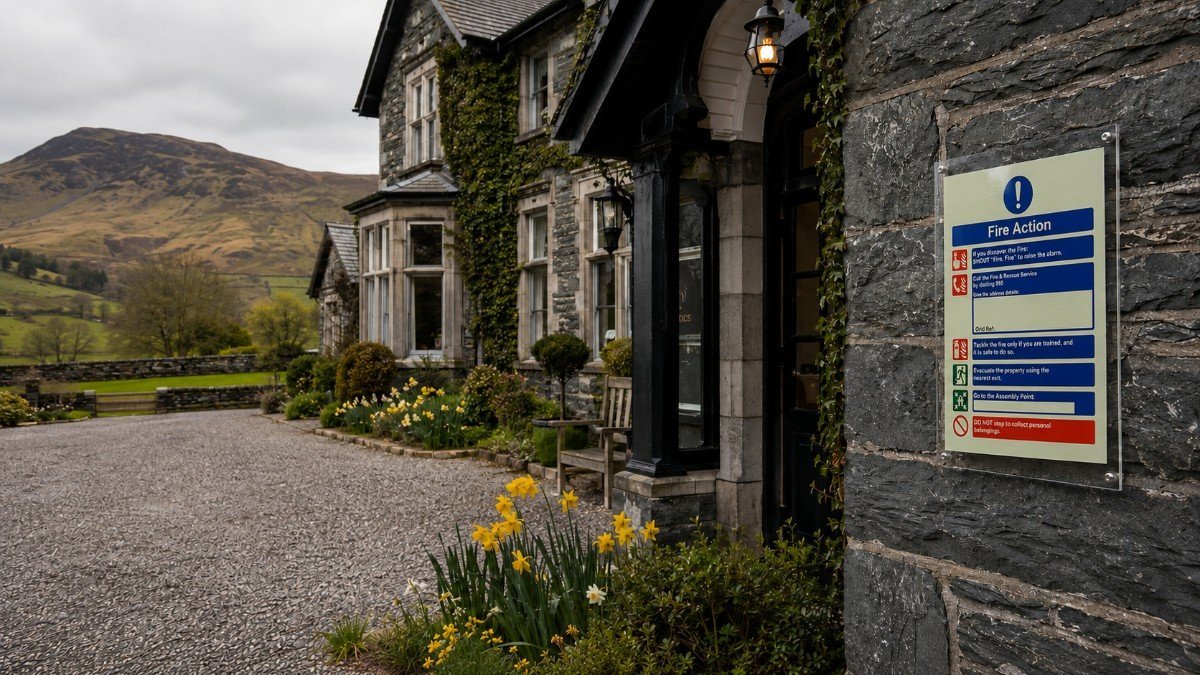
A guest house full of paying visitors is one of the higher-risk places a fire can start, because people are asleep and may not know their way around the building. Before the Lake District season fills your rooms, it pays to walk the premises and check the basics are all in order. This pre-season fire safety checklist for hotels and guest houses covers your alarm, extinguishers, emergency lighting, escape routes and the fire risk assessment that ties it all together.
Why sleeping accommodation is treated as higher risk
Anywhere people sleep as paying guests, including hotels, bed and breakfasts, guest houses and holiday lets, is treated as higher risk for a simple reason. When guests are asleep, it takes longer to notice a fire and longer to get everyone out, especially when they do not know the layout. That means your detection, your escape routes and your staff awareness all need to be that bit more reliable.
As the person responsible for the premises, you are expected to have a fire risk assessment, act on what it finds, keep your alarm and detection maintained, keep escape routes clear and make sure staff know what to do. A pre-season walk-through is the easiest way to confirm all of that is still true after a quiet winter.
After a quiet, damp winter at low occupancy, standby batteries go flat, detectors gather dust, fire doors get propped open and escape routes fill with clutter. Find and fix these before the rooms fill, while you still have time to book in any work.
Your pre-season checklist
Work through these checks before occupancy ramps up. They do not replace a professional fire risk assessment, but they cover the areas that matter most at the start of the season.
Fire risk assessment, alarms and detection
- Your fire risk assessment reflects the building as it is now, and you have acted on its findings. Review it before the season and after any change to the premises or how they are used.
- The fire alarm and detection system has had its routine service by a competent engineer.
- Staff carry out and record the weekly user test of the alarm, using a different call point each week.
- Smoke and heat detection covers escape routes and risk rooms, and nothing has been covered, blocked or removed.
Extinguishers and emergency lighting
- All portable extinguishers have been serviced by a competent person within the last year, and are correctly sited and clearly signed.
- Extinguisher pressure gauges read in the green and no units are missing, discharged or damaged.
- Emergency lighting has had its regular function checks and its annual full-duration test, recorded in the logbook.
- Emergency lights cover escape routes, stairways and final exits, and any failed fittings have been replaced.
Escape routes, fire doors and staff
- Escape routes and final exits are clear, unlocked from the inside and free of stored items.
- Fire doors close fully onto their frames and are not wedged or propped open.
- Exit and directional signage is in place and visible, including on guest floors.
- Staff know the evacuation plan, how to raise the alarm and how to help guests who are unfamiliar with the building.
What the law expects of you
If you run premises where people sleep as paying guests, you are responsible for fire safety there. That means having a suitable fire risk assessment, acting on it, and keeping it under review so it stays accurate after any significant change to the building or how it is used. There is no fixed legal date for that review, but checking it before each season is a sensible habit. Getting it wrong is taken seriously, and a serious failing can carry an unlimited fine, so it is well worth keeping on top of.
Why pre-season matters in the Lake District
The county’s hospitality trade steps up as the season starts. Rooms that sat empty over winter come back into use, you take on seasonal staff and the building fills with guests who do not know their way around. A pre-season check tends to surface the faults a quiet winter creates, and it leaves you with fresh paperwork for your insurer before the busy weeks arrive. It also means new staff are briefed before they are looking after a full house.
Frequently asked questions
How often should a hotel fire risk assessment be reviewed?
There is no fixed legal interval. You must keep it under review and revise it after any significant change, or if you have reason to think it is out of date. For seasonal accommodation, reviewing it before peak season each year is sensible practice and gives you time to act on the findings.
Do small bed and breakfasts and holiday lets need a fire risk assessment?
Yes. Premises where people sleep as paying guests are covered, so whoever is responsible must assess the risk and act on it. There is a simpler route for smaller, less complex premises, and we can point you to it or carry the assessment out for you.
How often do alarms and extinguishers need servicing?
As a rule of thumb, a fire alarm should be serviced by a competent engineer at least twice a year, with a weekly user test by staff in between, and portable extinguishers serviced once a year. Emergency lighting needs regular function checks and an annual full-duration test.
Sources
- Home Office, Fire and rescue incident statistics: England, year ending March 2024.