Good fire safety for schools and educational settings in Cumbria comes down to three things: a current fire risk assessment, equipment that is kept in working order, and staff who know how to get everyone out. Whether you run a small primary, a nursery or a large secondary, the job is the same. This guide sets out who is responsible, what needs checking, and a term-by-term routine you can work to through the year.
Who is responsible
Fire safety in a school sits with the employer. For a maintained school that is normally the local authority or the governing body, and for an academy or free school it is the trust. In practice the day-to-day work falls to the headteacher and the site team, but the legal duty holder must make sure a suitable fire risk assessment is in place and that every piece of fire safety equipment is kept maintained. If you are not certain who holds that duty in your setting, that is the first thing to pin down.
A fire door wedged open with a chair will not hold back smoke. If a room genuinely needs ventilation, the answer is a hold-open device linked to the fire alarm, not a doorstop from the caretaker’s cupboard. Check your fire doors close fully and seal as you walk the building.
Keeping your equipment in order
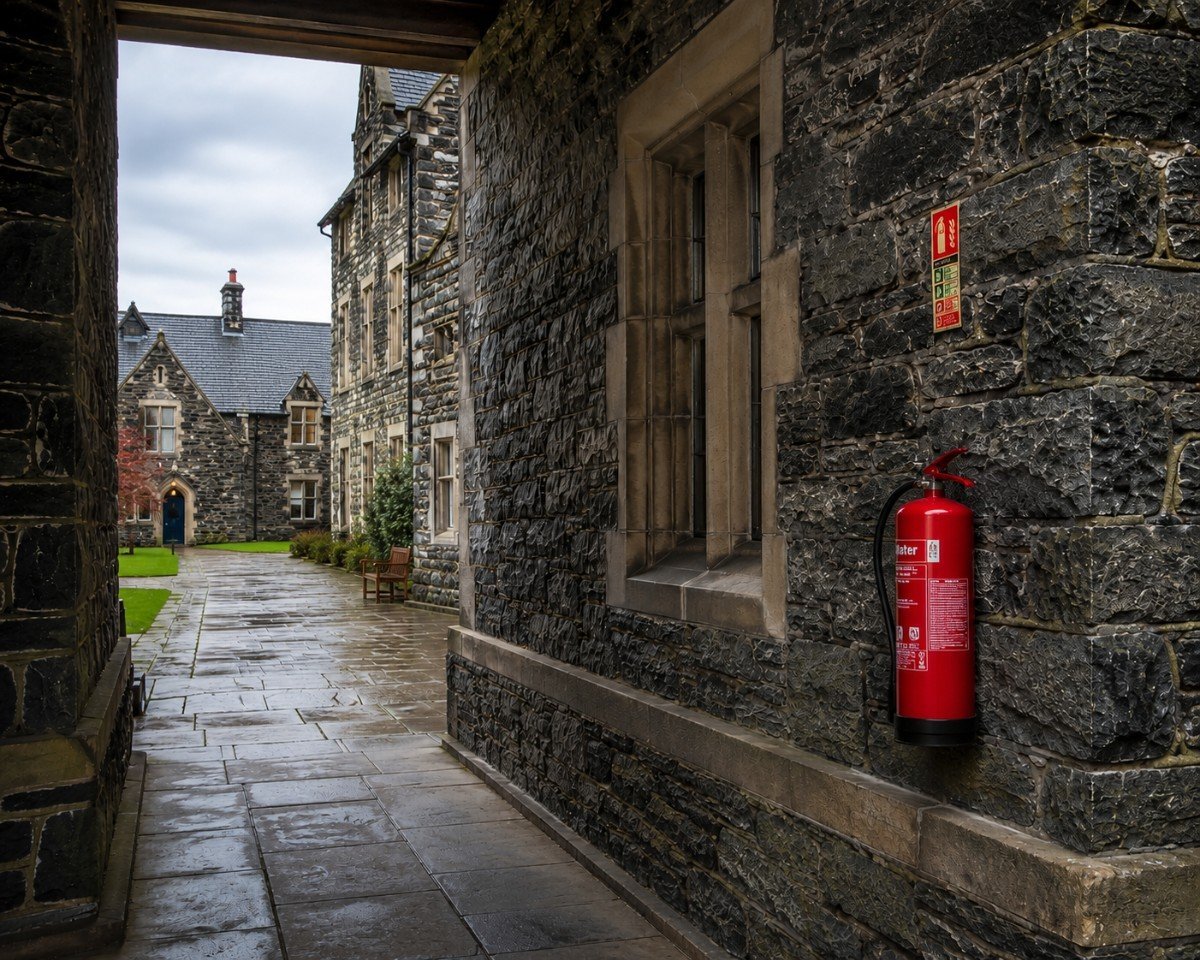
Most schools rely on a fire alarm system, emergency lighting and portable extinguishers, and all three need looking after. The accepted routine is straightforward. A competent engineer should service the fire alarm at least every six months, with staff carrying out a quick weekly call-point test in between. Emergency lighting needs a short monthly function check and a longer annual test. Portable extinguishers should be serviced by a competent person once a year, alongside your own regular look to make sure none have been moved, blocked or hidden behind a classroom display.
Use a reputable, certificated firm for the servicing so the work stands up to scrutiny, and keep every visit recorded in your logbook.
Where schools most often slip up
Issues worth fixing now
- A fire risk assessment left in a drawer. Review it whenever the building, its use or staffing changes.
- Fire doors propped open without alarm-linked hold-open devices.
- Staff who have not had fire safety training since induction. Supply teachers, teaching assistants and lunchtime supervisors are often the ones missed.
- Emergency lighting that nobody is checking month to month.
- Extinguishers moved, blocked or hidden, with no annual service.
- A fire alarm logbook with gaps in the weekly call-point records.
A term-by-term checklist
Fire safety works best spread across the year rather than crammed into one September panic. A logbook matters just as much: if you test but never write it down, you cannot show it was done, and assessors, insurers and the fire and rescue service all read a missing record as missing maintenance.
Autumn, spring and summer actions
- September: review the fire risk assessment and run induction training for all new staff, including supply teachers and volunteers.
- October: run your first full fire drill of the year. Time it, record it and debrief with staff afterwards.
- November: carry out the monthly emergency lighting check and book the annual full test if it is due.
- January: confirm the fire alarm has had its six-monthly service and that the logbook is current.
- February to March: walk the building checking every fire door, then run a second drill using an alternative exit route.
- May: review extinguisher servicing and check that any room changes have not blocked an escape route.
- July: brief the site team on holiday works. Hot works, stored materials and any disabled alarm zones all need a plan.
Frequently asked questions
Who is the responsible person for fire safety in a school?
Usually the employer. For a maintained school that is normally the local authority or the governing body; for an academy or free school it is the trust. The duties are delegated to the headteacher and site team, but the legal duty holder must keep a suitable fire risk assessment in place and the fire safety measures maintained.
How often should a school service its alarm and extinguishers?
The fire alarm should be serviced by a competent person at least every six months, with a weekly call-point test by staff in between. Portable extinguishers should be serviced once a year. Your fire risk assessment may call for more.
Do all staff need fire safety training?
Yes. Anyone working in the building should know the escape routes, the assembly point and what to do when the alarm sounds, and supply and part-time staff need it too. A short refresher each year keeps it fresh.
Sources
- Home Office, fire incidents in education premises, England (year ending March 2025).