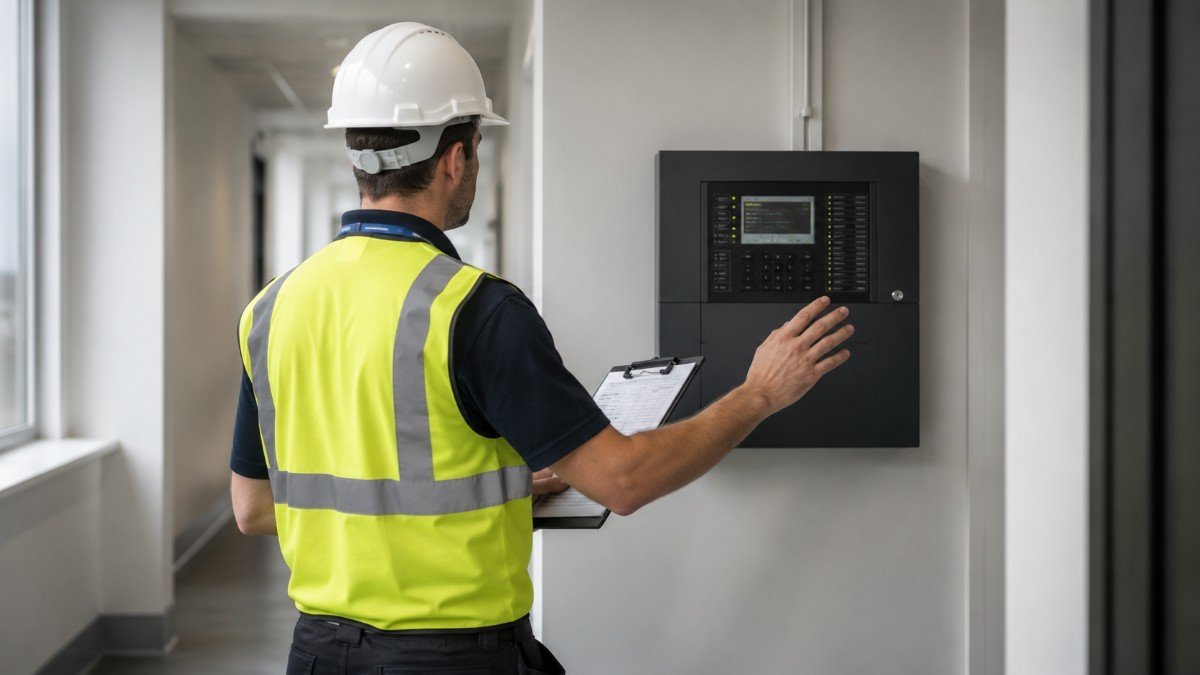
A fire alarm only protects people if it works on the day it matters. Keeping it reliable means small checks every week and every month, plus a proper service twice a year. Plenty of Cumbria businesses book the service but let the weekly and monthly checks drift. This guide sets out a simple fire alarm maintenance schedule you can follow right through 2026, and explains who does what.
Why the schedule matters
An alarm that sits untouched for months can quietly fail. Batteries go flat, detectors gather dust, and building work can leave parts of a room uncovered. None of that shows up until the alarm is needed, by which point it is too late. A short, regular routine keeps faults small and catches them early, which is far cheaper than a system that lets you down.
As the person in charge of the premises, you are expected to keep your fire detection equipment in good working order and to keep a record of the checks you carry out. The schedule below is the recognised way to do both.
What staff can do in house
Most of the routine is quick and can be done by a member of staff who has been shown how. It splits into a weekly job and a monthly one.
Every week
- Test one call point: set off a single manual call point (the red break-glass unit) and check the alarm sounds and the panel shows it. Then reset.
- Move around the building: pick a different call point each week so they all get covered over time.
- Write it down: note the date, the point tested and the result in the logbook. Warn staff and any monitoring centre before you test.
Every month
- Check the panel: look for fault lights and confirm the power and charge indicators are normal.
- Walk the floors: make sure no detectors have been covered, blocked, painted over or removed during work or redecoration.
What the engineer does
The deeper work needs a competent fire alarm engineer. The accepted standard is a full service at least every six months, so two visits a year for most premises.
Twice a year
- Full service: a thorough inspection by a competent engineer, with a signed report for your logbook.
- Everything tested over the year: across the visits, every detector, call point, sounder and the standby batteries get checked.
- Faults written up: anything found is recorded and you receive an inspection certificate.
Bigger or higher-risk systems can be split into more frequent visits if you agree it with your engineer. For most premises, though, the baseline is twice a year.
If you test weekly but never write it down, you cannot show it was done. Fire risk assessors, the fire service and insurers all read a missing logbook as missing maintenance, so record every check.
Why spring is a good time in Cumbria
Spring is when the county’s tourism and hospitality trade steps up. Holiday lets reopen, hotels take on staff and outdoor centres get ready for school groups. If a system has sat through a quiet, damp winter at low occupancy, a pre-season service often turns up flat standby batteries, dusty detectors and changes to the building that have affected coverage. It also leaves you with a fresh certificate for your insurer before the busy weeks arrive.
Your questions answered
How often should fire alarms be serviced?
The accepted standard is a service by a competent engineer at least every six months, with a weekly call-point test and a monthly panel check by staff in between. Your fire risk assessment may ask for more.
Is fire alarm testing a legal requirement?
In effect, yes. You must keep the system maintained and keep a record of your fire safety arrangements. Following the recognised schedule, and keeping the logbook, is how you show it.
Who can test the system?
Staff can do the weekly and monthly checks once they have been shown how. The six-monthly service should be carried out by a competent fire alarm engineer.
Sources
- Home Office, Fire and rescue incident statistics: England, year ending March 2024 (gov.uk).