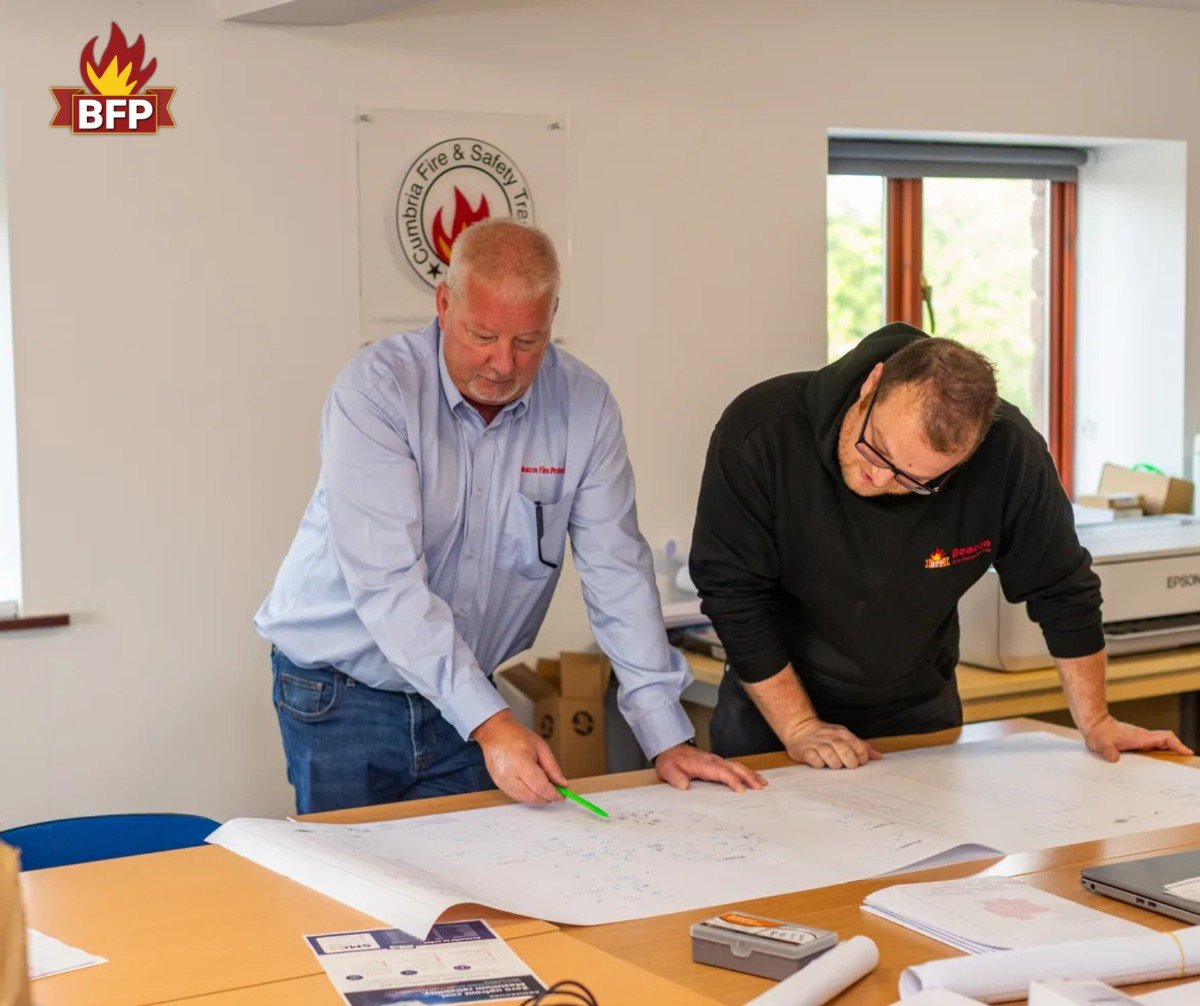
A mid-year fire safety review is a simple way to confirm three things: your fire risk assessment is still up to date, your alarm and extinguisher checks are happening on schedule, and your staff know what to do if something goes wrong. For small businesses in Cumbria, July is when getting this right matters most. The tourist season is in full swing, premises are busier than usual, and a gap that sat quietly in February is now a live risk.
Why summer is the right time to check
Between June and September, much of the county is at its busiest. Restaurants extend into outdoor areas, shops bring stock onto the pavement and holiday lets run at full occupancy. Home Office figures show that accommodation and catering premises are among the more common non-domestic buildings involved in fires, so the businesses with the biggest seasonal swing are also the ones with the most to manage.
A fire risk assessment written for a quiet winter does not account for a packed dining room with a temporary outdoor kitchen, extra seasonal staff and storage rooms full to the ceiling. If your premises run very differently in July than they did in January, your fire safety arrangements need to keep up.
What the law expects of you
As the person responsible for the premises, usually the employer or building owner, you are expected to keep a current fire risk assessment and to review it whenever your premises change in a way that affects fire safety. A move from quiet winter trading to a busy summer is exactly that kind of change. You also need to record the significant findings of the assessment in writing. That written record is what a fire and rescue service inspector and your insurer will want to see, no matter how small your business is.
Where small businesses get caught out at mid-year
Most businesses do not fall down on the big things. They fall down on the small gaps that grow slowly and go unnoticed. These are the ones we see most often when visiting premises across the county:
- An assessment that has not been reviewed. The layout has changed, a room has been converted or new equipment has arrived, but the document still describes the old building.
- Extinguisher servicing overdue. Extinguishers need a basic service by a competent person once a year, with the date printed on the service label. If your last service was over a year ago, your equipment is behind.
- Alarm tests not recorded. Many businesses test the alarm each week but never log it, so they cannot show it was done.
- Emergency lighting unchecked. We regularly find units with failed batteries that nobody has noticed, because the routine test was skipped.
- Staff training lapsed. New seasonal staff often have not had a fire safety induction. If they do not know the escape route or the assembly point, your fire drill will not work.
Your mid-year fire safety checklist
July compliance review
- Confirm your fire risk assessment still reflects the premises as they are now, and record the significant findings.
- Check every extinguisher for a current service label dated within the last year. Look for missing pins, damaged handles or units blocked by stock and furniture.
- Review your alarm test logbook. You should have a weekly entry. If entries are missing, restart the routine this week and keep the logbook visible.
- Test all emergency lighting. Confirm each unit lights up, then record the date and result.
- Confirm every seasonal and new member of staff has had a fire safety induction covering escape routes, assembly points and where the extinguishers and call points are.
- Walk your escape routes. Check fire doors close fully on their own, corridors are clear, and external exits are not locked or blocked by deliveries.
Temporary and seasonal workers are entitled to the same fire safety training as everyone else. A team member who does not know the evacuation plan is both a safety risk and a weak point in your compliance. Do not wait until the first fire drill to find out.
Frequently asked questions
How often should a fire risk assessment be reviewed?
There is no fixed calendar interval. You should review it regularly and whenever there is reason to think it is out of date or your premises have changed significantly. For a Cumbria business, the move from quiet winter trading to a busy summer is exactly that kind of change.
Do seasonal staff need fire safety training?
Yes. Temporary, part-time and seasonal workers all need fire safety training. Give it when they start, and cover the escape route, the assembly point and what to do if they find a fire.
What happens if my extinguishers are overdue for servicing?
You are no longer keeping your firefighting equipment in good working order. An overdue extinguisher may not work when it is needed, and a fire and rescue service inspector can take enforcement action if you cannot show it has been serviced.
Sources
- Home Office, Fire and rescue incident statistics: England (gov.uk).