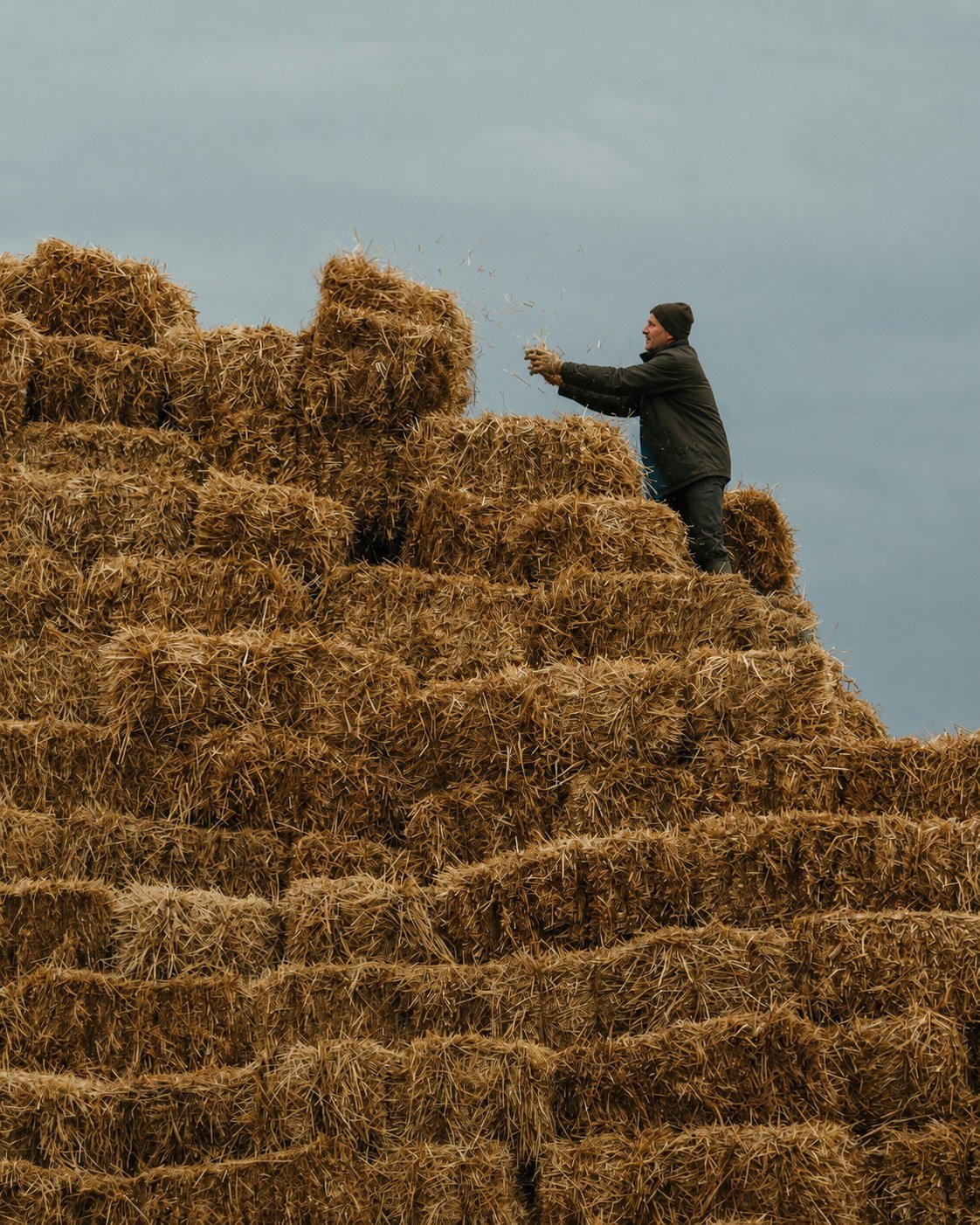
Lifting, carrying, pushing and pulling are part of almost every job on a farm. They are also one of the biggest causes of long-term injury in agriculture. For Cumbria farms taking on seasonal and casual workers, sensible manual handling training is a practical way to cut that risk and to show you have met your duties. This guide explains what the law actually asks for, what good training covers, and how to keep your records straight.
Why manual handling matters in farming
Agriculture has a poor record for musculoskeletal injury. HSE reports that in agriculture, musculoskeletal injury such as back pain, sprains and strains runs at over three times the rate for all industries. These are exactly the injuries that build up from repeated lifting of feed and seed sacks, manhandling gates and hurdles, dragging equipment and working in awkward postures.
The risk is higher again with a seasonal workforce. New and returning workers may not know the farm, the tasks or the kit, and the busy weeks are when corners get cut. Showing people how to handle loads, and giving them the right equipment, is one of the most effective steps a farm can take.
Training helps, but it cannot make an unsafe lift safe on its own. The law expects you to remove or redesign hazardous handling first, then use training to support the safer way of working you have put in place.
What the law actually requires
Manual handling on farms is governed mainly by the Manual Handling Operations Regulations 1992. The core duty in Regulation 4 follows three steps, in order: avoid hazardous manual handling so far as is reasonably practicable; where it cannot be avoided, assess it; and then reduce the risk of injury to the lowest level reasonably practicable. Regulation 4 also asks you to give workers general information about the weight of loads.
Training is not named as a separate statutory control in Regulation 4. Instead, HSE guidance treats good technique and training as one practical way of reducing risk, sitting alongside better equipment, smaller loads and better task design. So the right way to think about it is: assess the task first, change what you can, then train people in the safer method you have settled on.
Section 2 of the Health and Safety at Work etc. Act 1974 places a general duty on employers to provide such information, instruction, training and supervision as is necessary to ensure, so far as is reasonably practicable, the health and safety of employees. For a workforce that lifts and carries every day, that general duty is a large part of why manual handling training is expected.
What good training covers
The essentials for a farm course
- Why it matters: how handling injuries happen and why they often build up over time rather than from one obvious accident.
- Assessing the load and task: sizing up the weight, shape, grip and route, and knowing when to fetch help or equipment instead of lifting.
- Safer technique: hands-on practice on the real jobs, such as feed sacks, gates, hurdles and loading trailers, not just a textbook lift.
- Using equipment: sack trucks, trolleys, hoists, loaders and other aids that take the weight out of the task.
- Teamwork and communication: how to plan and signal a two-person lift safely.
The most useful training is practical and built around the tasks your workers actually do, delivered in plain English so that seasonal and overseas staff can follow it. Keep a simple record of who attended, the date and what was covered. That record is what an HSE inspector or your insurer will look for, and it is also how you keep track of who still needs training as the season turns over.
When to refresh training
There is no fixed legal retraining interval. HSE advises refreshing training when the work changes, when a risk assessment shows it is needed, or when there are signs the original training is not being followed. On many Cumbria farms it makes sense to tie a short refresher to the seasonal intake, so new and returning workers start the lambing, silage or harvest period up to date and confident.
Frequently asked questions
Is manual handling training a legal requirement for farm workers?
There is no single law that simply orders a course. The Manual Handling Operations Regulations 1992 require you to avoid, assess and reduce hazardous handling, and HSE guidance treats training as a practical way of reducing risk. The general training duty in the Health and Safety at Work etc. Act 1974 applies as well.
How often should manual handling training be refreshed?
There is no fixed interval. Refresh it when the work changes, when your risk assessment calls for it, or when you see the safe method slipping. Tying a refresher to the seasonal intake works well for most farms.
Does the training have to be classroom based?
No. The best training is hands-on and based on real farm tasks, with a short explanation of the risks and a written record of who attended.
Sources
- Manual Handling Operations Regulations 1992, Regulation 4 (legislation.gov.uk).
- Health and Safety at Work etc. Act 1974, Section 2 (legislation.gov.uk).
- HSE, Health and safety in agriculture, on musculoskeletal injury and fatal injury rates (hse.gov.uk).
- HSE, Manual handling at work, on avoiding, assessing and reducing risk (hse.gov.uk).