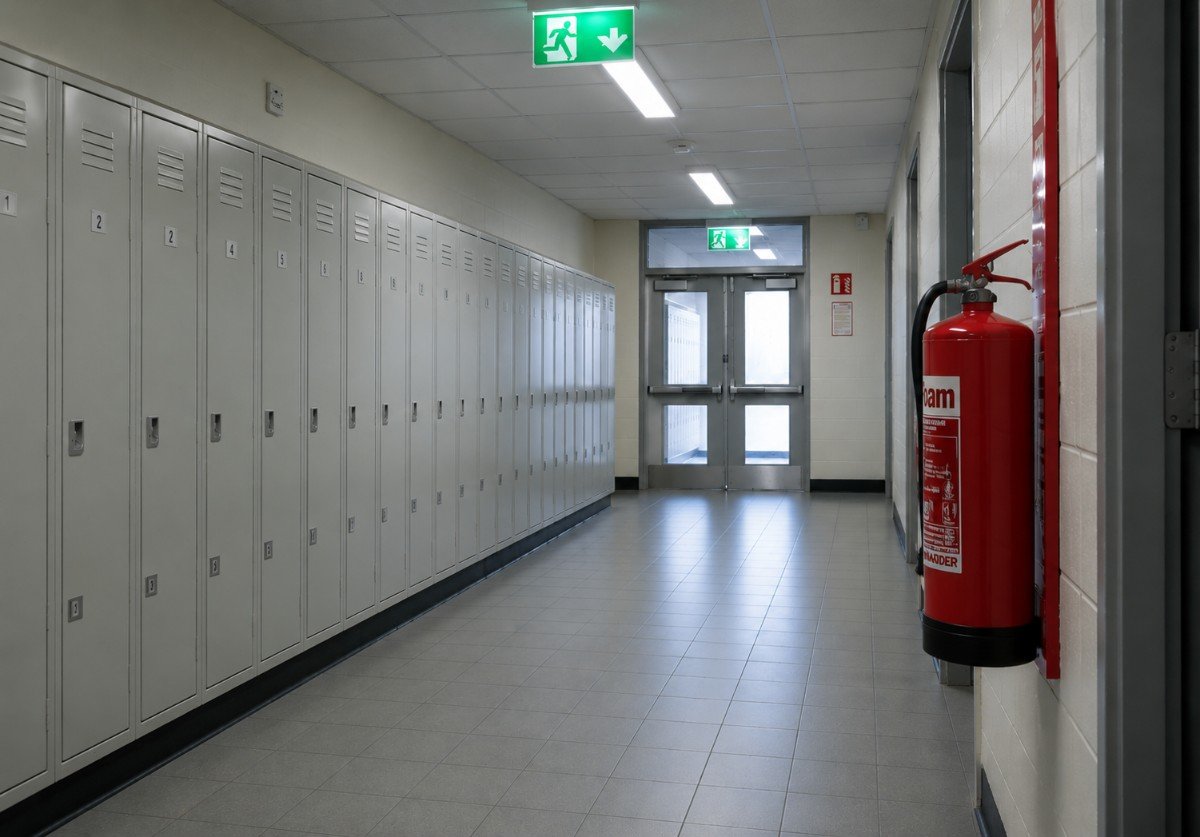
A school is at its quietest over the summer, which makes it the ideal time to get your fire safety in order before everyone comes back. This school fire safety checklist gives you a practical run through the things worth confirming during the break, so that when pupils and staff return in September the alarm works, the fire doors close, the escape routes are clear and your team knows exactly what to do.
Why the summer break is the moment to act
If a building has stood empty for weeks, things change. Holiday building work, a reorganised classroom, and boxes left in corridors can all block an escape route or alter the fire risk without anyone noticing. A walk through the site before term starts catches those problems while there is still time to put them right.
As the person responsible for the premises, usually the headteacher with the governing body or trust behind them, you are expected to keep an up to date fire risk assessment and act on what it finds. The summer is the natural point to review it, especially if the layout has changed or it has not been looked at in the past year.
Your before-September fire safety checklist
Work through this in the final couple of weeks of the break. It covers the things that most often slip in a school over the holidays.
Before pupils return
- Fire risk assessment: review it, and arrange an update if the building layout has changed or it has not been looked at in the last year.
- Fire alarm: run a full system test rather than a glance at the panel, log the results, and restart weekly call point testing from the first day staff are back.
- Fire extinguishers: confirm each one has had its annual service, is in its place, sealed and showing the right pressure.
- Fire doors: check each closes fully into its frame, with seals intact. A door propped open with a wedge or a bin fails the test.
- Escape routes: walk every corridor, stairwell and final exit and clear anything that has been stored there over the break.
- Emergency lighting: test each fitting and record the results in the fire safety logbook.
- Staff training: brief everyone on the evacuation procedure on the first INSET day, and give new starters, supply teachers and assistants the full induction, including assembly points and the register.
If the alarm has gone several weeks without a test over the holidays, carry out a proper check of the whole system before the building is back in use. Look for faults or isolations left active during building work, and make sure any detector heads covered up during decorating have been uncovered.
Fire doors and staff training: the two that catch schools out
Two gaps come up again and again when schools reopen. The first is fire doors held open with wedges or extinguishers, which stops the door doing its real job of holding back smoke long enough for everyone to get out. If a door genuinely needs to stay open during the day, the proper answer is a hold open device linked to the alarm, so the door closes by itself the moment the alarm sounds.
The second is out of date staff training. School teams change a lot, and someone who joined mid year may never have been shown the escape route from their own classroom. You are expected to give staff proper training when they join and whenever the risks change, so the first INSET day of term is the moment to close that gap for everyone.
Why the first drill of term matters
Schedule your first fire drill within the opening fortnight. Pupils learn the routine best early on, particularly the youngest children and any new starters finding their way around the building. A drill also tests everything else on this checklist at once: the alarm, the escape routes, the assembly procedure and how quickly staff can account for every child. Record the time, anything that went wrong and what you did about it, because that log is exactly what a fire officer will ask to see on a visit.
What the law asks of you
As the person responsible for the premises, you must keep an up to date fire risk assessment, act on what it finds, and keep your fire safety equipment in good working order. Fixed testing intervals come from recognised good practice rather than the law itself, but the records you keep over the summer are what demonstrate you have met your duty, and penalties for a serious failure can be significant.
Frequently asked questions
How often should a school fire risk assessment be reviewed?
It should be kept under regular review and updated whenever something changes, such as building work or a new layout. There is no fixed legal interval, but looking at it at least once a year is widely recommended, and the start of the school year is a sensible point to do it.
What fire alarm testing should a school do each week?
The usual recommendation is to test one manual call point each week, choosing a different one each time so they are all covered over a rolling cycle. Log every test, and have the system serviced by a competent engineer at least twice a year.
Can school fire doors be held open?
Only if they have an automatic release device linked to the alarm, so they close when it sounds. Wedges and extinguishers are not acceptable. Fire doors in school buildings are expected to be self closing.
Sources
- Fire safety guidance for responsible persons (GOV.UK).
- British Standards for fire detection and alarm systems, fire extinguisher maintenance and emergency lighting (BSI).